Outside aerospace · Design Thinking Lab · 2024–25
Cloud-based irrigation to stop over-watering
Most of India’s freshwater goes to farms, and a lot of that is wasted on a timer. This is a small loop that waters only when the soil is dry and rain is not coming.
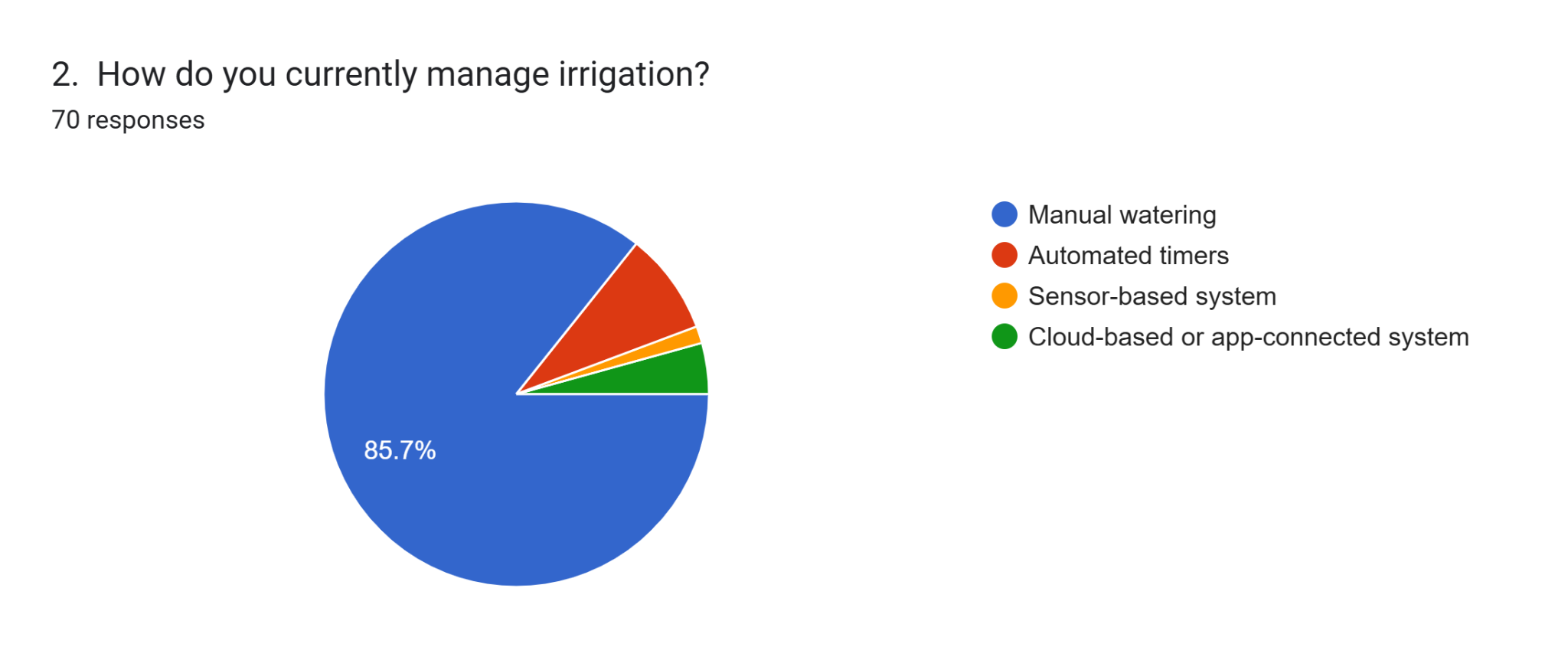
- 85.7%still water by hand
- ESP32on Wi-Fi
- 24 hrain forecast
- manualpump override
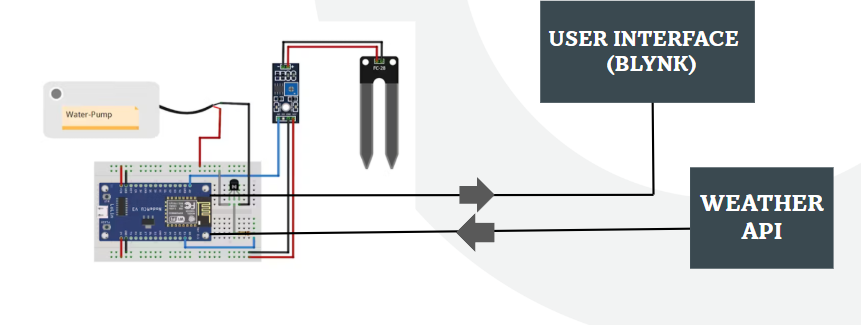
Capacitive moisture in the ground, OpenWeatherMap for a 24-hour rain call, ESP32 on Wi-Fi, a relayed pump, and a Blynk dashboard with a switch you can actually hit. I worked procurement and electrical.
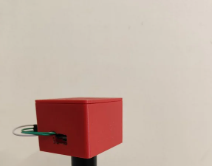
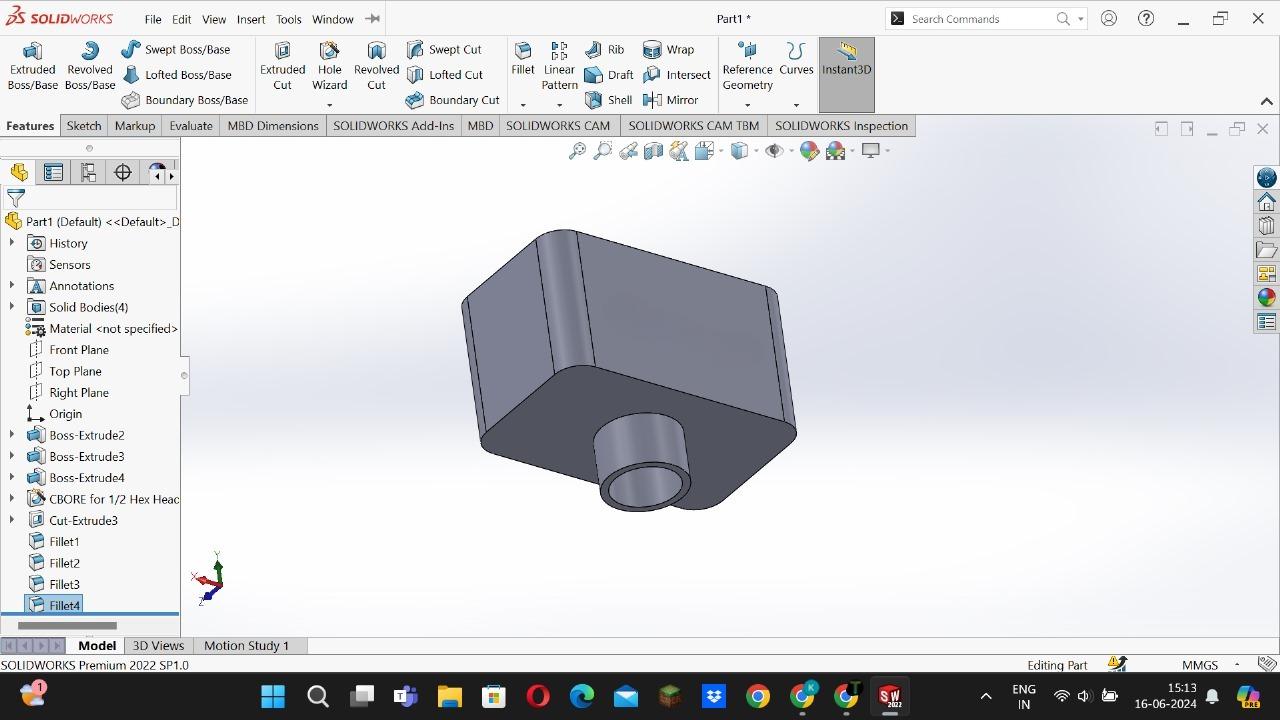
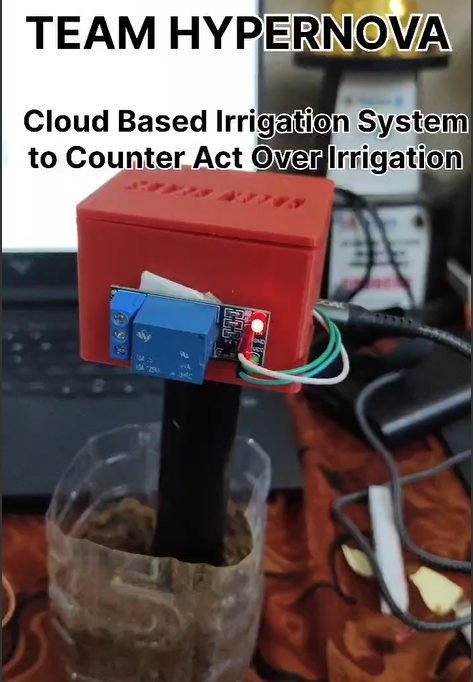
The enclosure is a SolidWorks part, 3D-printed in red, with the probe sticking out of the bottom so it can be pushed into a pot or a bed.
The problem we actually heard
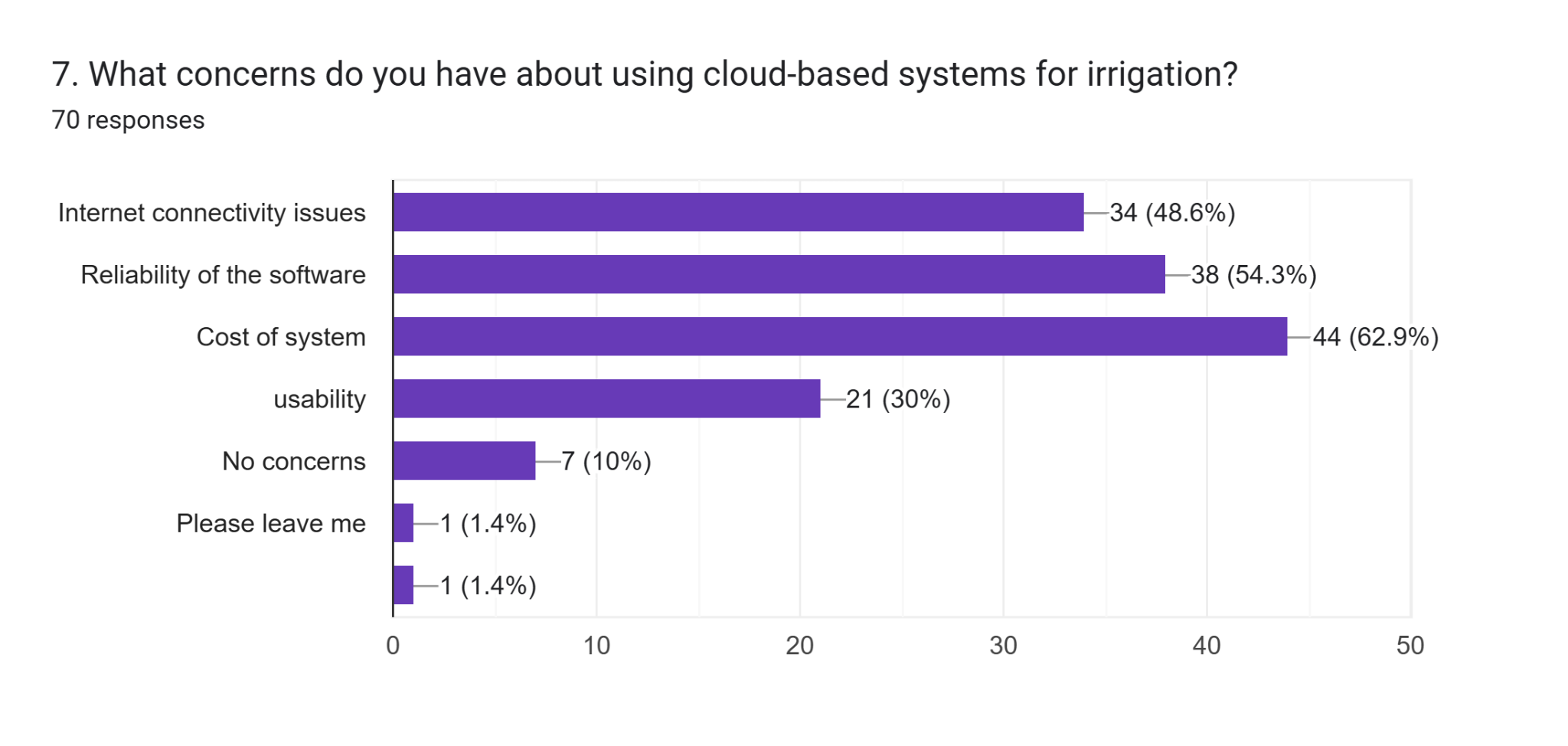
A Google Form plus observation, ~70 responses. 85.7% still water by hand. 75.4% wanted semi-automatic, not a fully closed loop they cannot touch. Cost (62.9%) and software reliability (54.3%) beat “no concerns.” That is why the dashboard has a pump switch, not only an algorithm.
What we built
| Controller | ESP32 / NodeMCU, Arduino IDE, Wi-Fi to the cloud. |
|---|---|
| Sense | Capacitive soil-moisture probe (FC-28 style in the circuit). |
| Actuate | Relay module + 5 V / 12 V pump. |
| Weather | OpenWeatherMap. Skip watering if rain is expected in 24 h. |
| Failsafe | A second, lower moisture threshold turns the pump on anyway if the forecast was wrong and the soil keeps drying. |
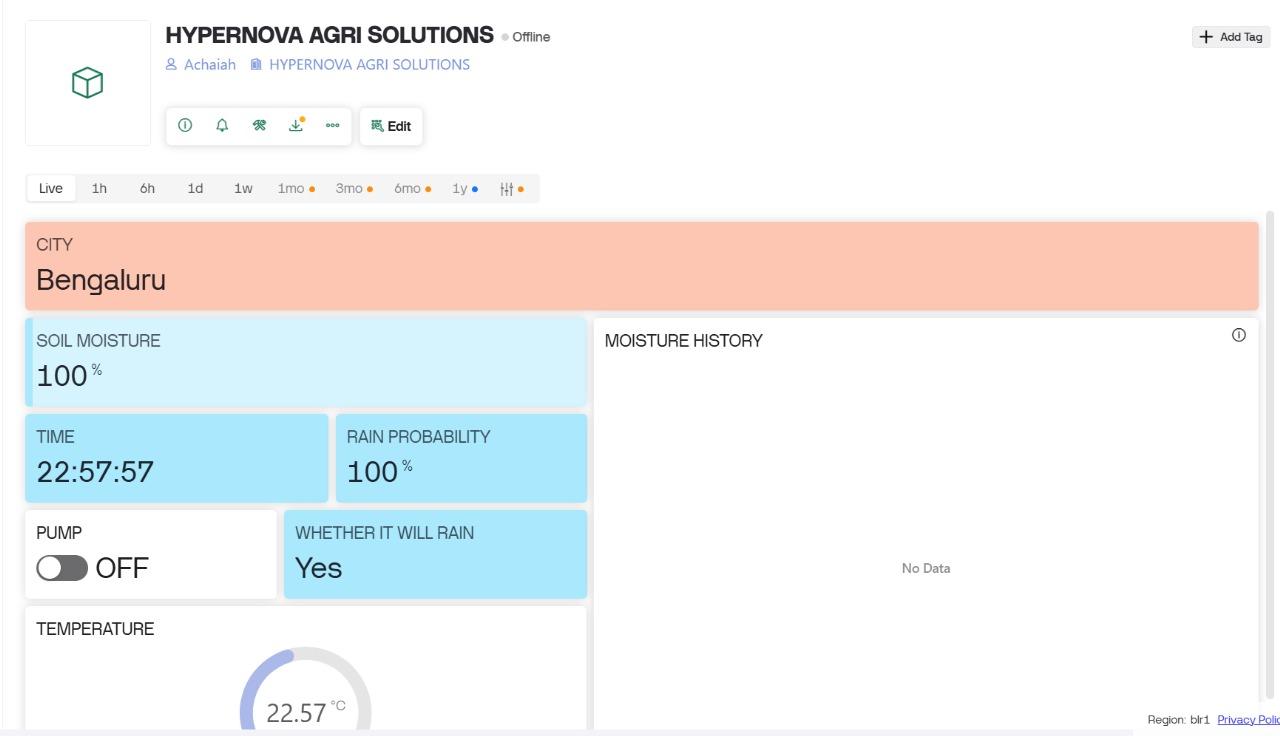
| UI | Blynk — “Hypernova Agri Solutions.” Moisture, rain probability, pump ON/OFF, temperature, Bengaluru as the city. |
| Decision concept | The write-up also specifies a gradient-boosting model on soil type, crop, temperature, and weather. The hardware we shipped is the threshold + forecast + failsafe loop. |
How it decides
Moisture below the crop threshold and no rain in the next day → pump on. Rain forecasted → wait. Moisture still falling through a lower failsafe → pump on regardless. Cloud log: moisture, weather, irrigation events. Manual override on the dashboard because 75% of the survey asked for it.
The report’s objective was at least 30% less water than a timer. Testing with small-scale users and gardeners confirmed savings, less labour, and fewer pre-rain cycles. We did not publish a single farm-scale percentage, so I am not inventing one here.
What we would do next
- Mobile-first UI and SMS for phones that are not smartphones.
- Offline / edge decisions for rural links (the survey’s connectivity worry).
- NPK and pH if the same stick is going to talk about fertiliser, not only water.
- LoRaWAN or GSM instead of only Wi-Fi. Solar for off-grid beds.